

Tadanobu Nakayama1)
1) Regional Environment Conservation Division, National Institute for Environmental Studies (NIES)
Tadanobu Nakayama1)
This monograph (Part VIII, CGER-I178-2025) succeeds a series of previous reports: Vol. 11 (Part I, CGER-I063-2006), Vol. 14 (Part II, CGER-I083-2008), Vol. 18 (Part III, CGER-I103-2012), Vol. 20 (Part IV, CGER-I114-2014), Vol. 26 (Part V, CGER-I148-2019), Vol. 29 (Part VI, CGER-I167-2023), and Vol. 30 (Part VII, CGER-I169-2024) published before.
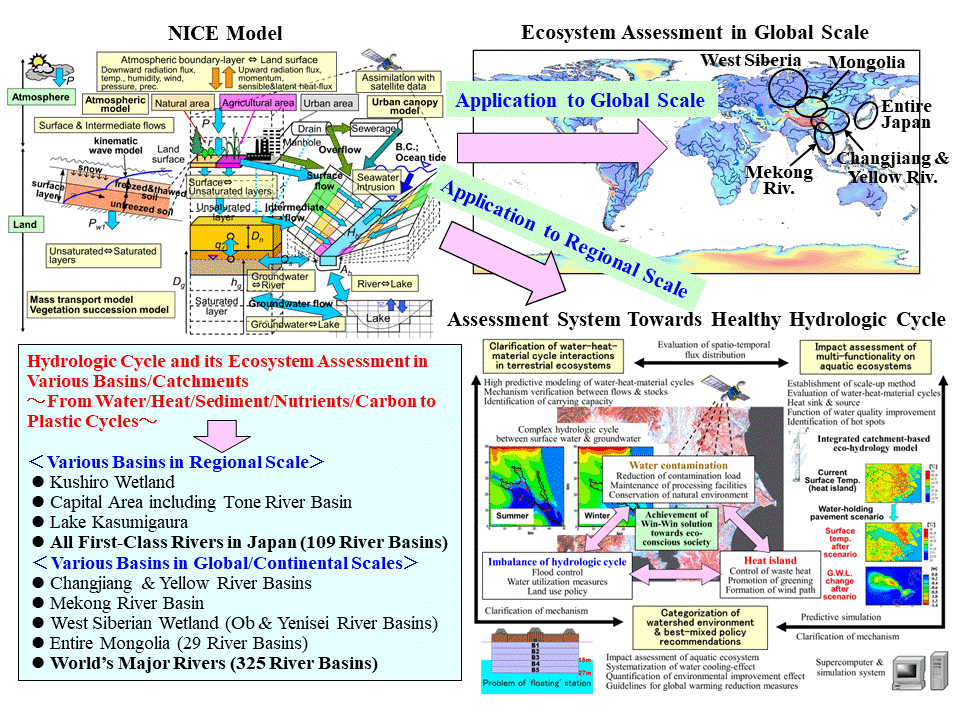
The National Integrated Catchment-based Eco-hydrology (NICE) is a 3-D, grid-based eco-hydrology model that includes complex subsystems of natural vegetation, irrigation, urban water usage, stream junctions, and dams/canals to develop integrated human and natural systems and analyze the impact of anthropogenic activity on eco-hydrological change. In addition to the water cycle, NICE is capable of simulating heat, sediment, nutrients, carbon cycles, and associated vegetation succession. The author has so far conducted simulations using NICE in various basins at regional scale (Kushiro Wetlands, Tokyo metropolitan area, Lake Kasumigaura, and all first-class river basins throughout Japan) to global scale (Yangtze and Yellow Rivers, Mekong River, Siberian Wetlands, Mongolia, and major global river basins) (Fig. 1). The author developed natural-human systems in the model and analyzed the effects of human activities on ecosystem changes in these basins.
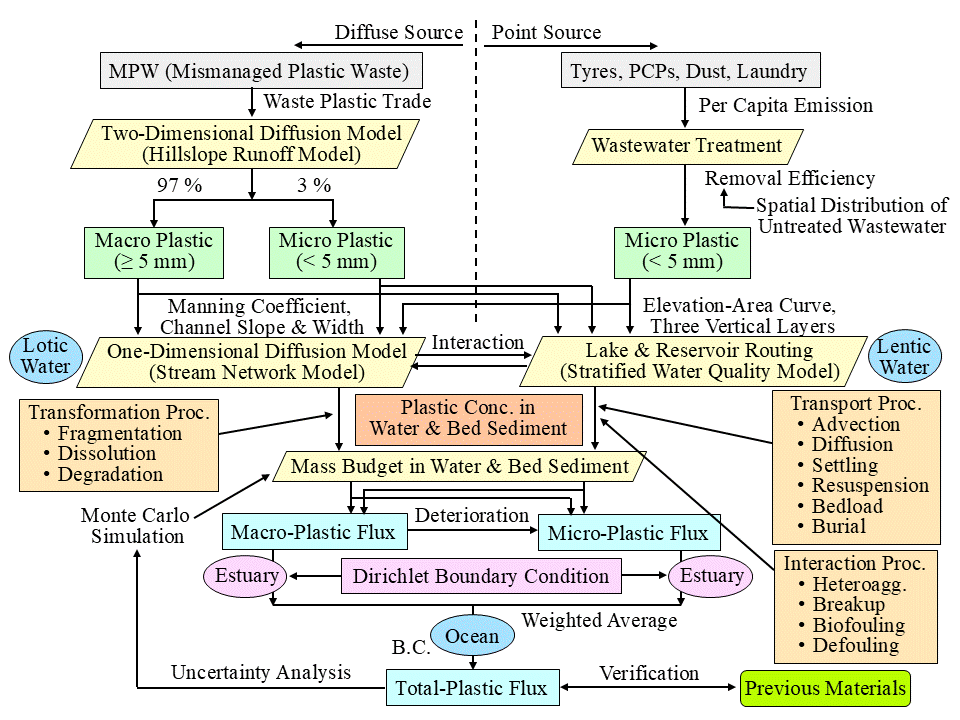
In the current monograph (Part VIII), NICE coupled with the plastic debris model was further extended to incorporate transport, transformation, and interaction processes to quantify plastic dynamics along the terrestrial-aquatic-estuarine continuum and devise solutions and measures for reducing plastic inputs to the ocean as an extension of Vo. 30 (Part VII) (Fig. 2).
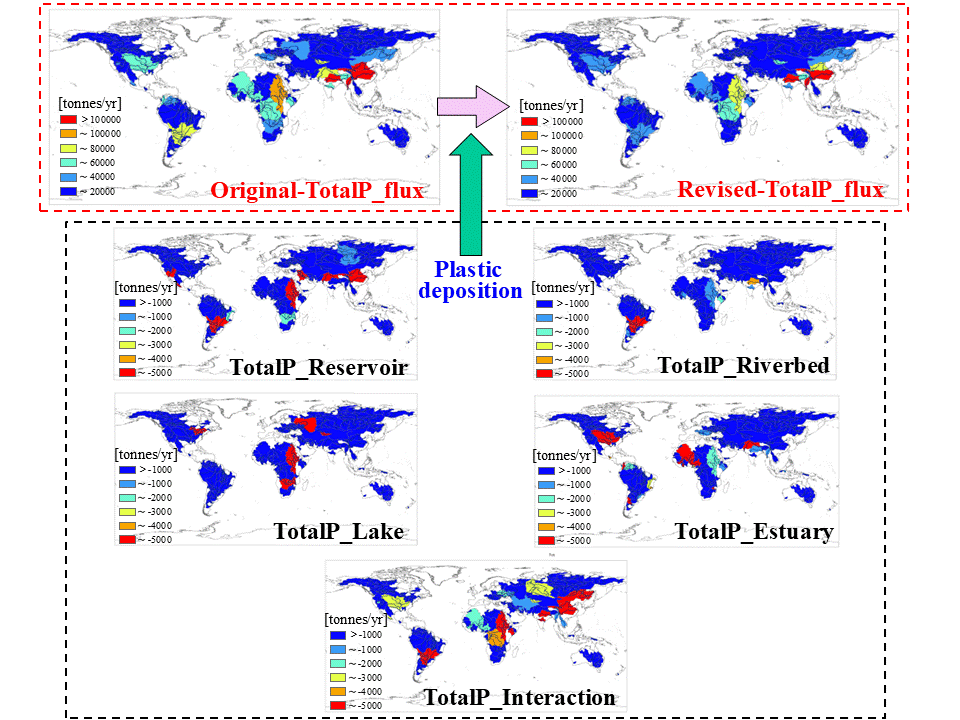
The simulated results show the distribution of various deposits and total plastic transport to the ocean (Fig. 3). Asia and Africa account for a large proportion of plastic deposition on a global scale. In particular, the results show that the interaction processes of heteroaggregation, breakup, and biofouling heterogeneously, newly incorporated in the present model, affect the plastic cycle on a global scale.
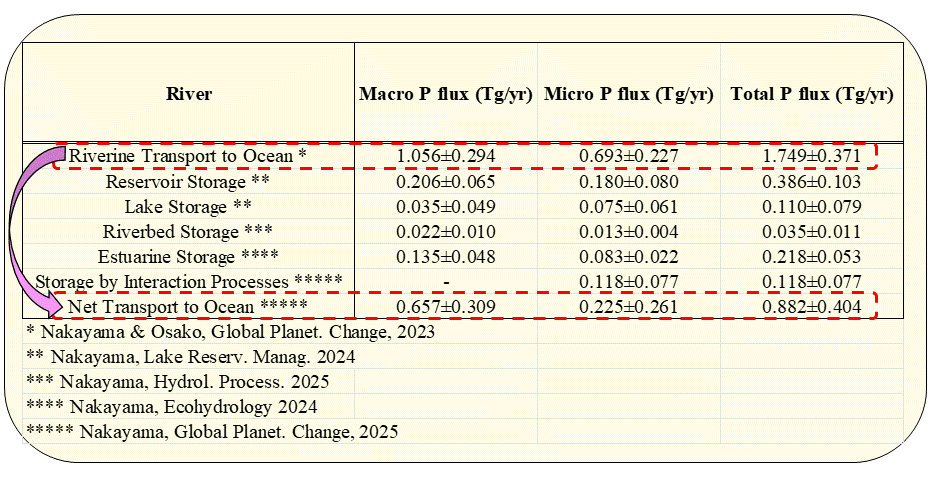
The model also estimated the weighted average plastic budget for global major rivers (Table 1). The simulated result indicates that it is difficult to ignore the sinking of heteroaggregated and biofouled plastics to riverbeds, reservoirs, and lake beds, and estuarine storage. The riverine plastic transport to the ocean revised in the present study is revised as 0.882±0.404 Tg/yr, with macroplastic flux at 0.657±0.309 Tg/yr and microplastic flux at 0.225±0.261 Tg/yr, which are within the range of previous values.
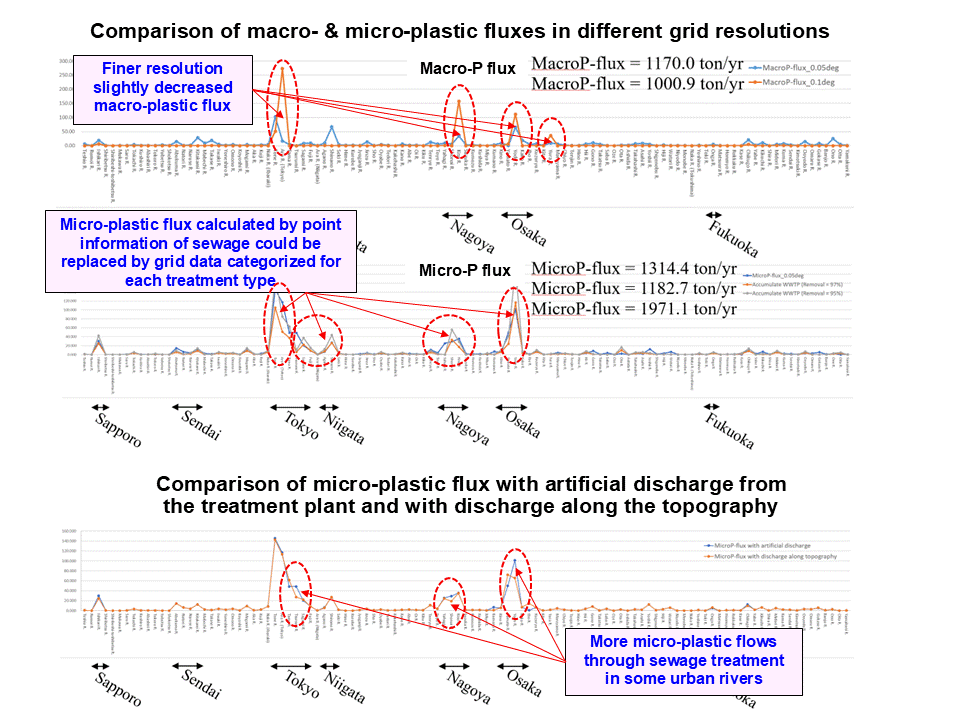
Further, the model improved the accuracy of simulating the plastic cycle in urban regions in the entire Japan with a finer resolution, and clarified that the plastic cycle in rivers flowing through urban areas has been significantly altered (Fig. 4).
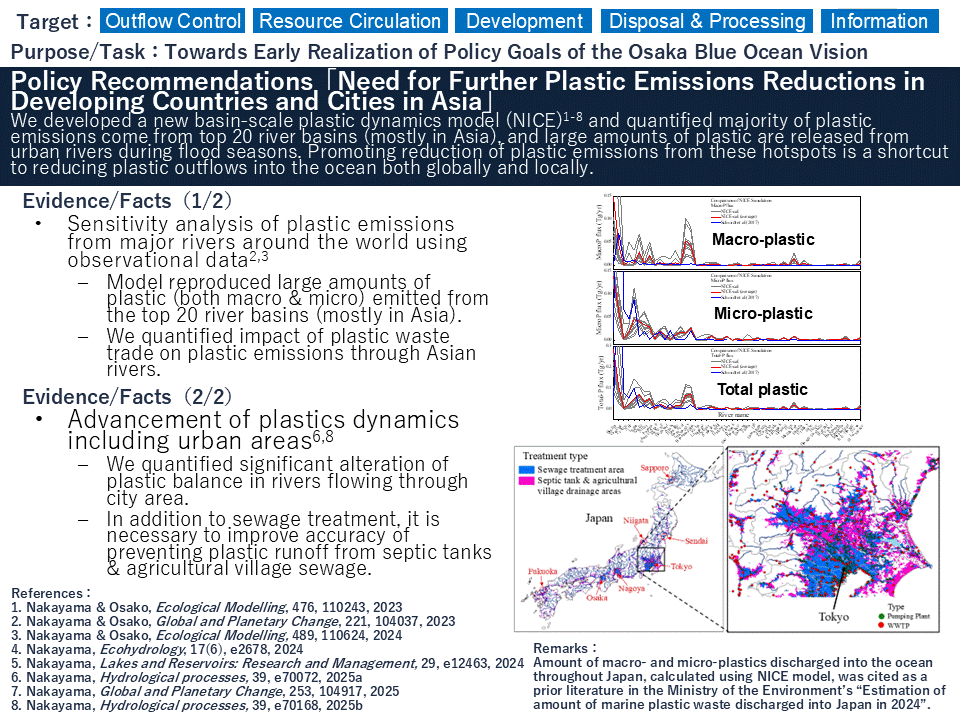
Finally, based on the findings of the present study, the author made a policy recommendation entitled “Need for further reductions in plastic emissions in developing countries and cities in Asia” (Fig. 5). The author developed a new basin-scale plastic dynamics model (NICE) and quantified majority of plastic emissions come from top 20 river basins (mostly in Asia), and large amounts of plastic are released from urban rivers during flood seasons. Promoting reduction of plastic emissions from these hotspots is a shortcut to reducing plastic outflows into the ocean both globally and locally.
This methodology presented in this monograph further advances the modeling of plastic dynamics in various basins, which was begun to develop in the previous monograph, Vol. 30 (Part VII), and will become an increasingly powerful tool for developing measures to reduce plastic emissions to the oceans at regional, continental, and global scales. In addition to the Osaka Blue Ocean Vision, it will also help deepen understanding of the United Nations Sustainable Development Goals (SDGs) needed to achieve sustainability by 2030.
 PDF, 12.7 MB